
AI adoption is moving faster, but there are still hesitations. A KPMG study found that 66% of people regularly use AI, but only 46% are willing to trust it. That skepticism is understandable — especially in upstream oil and gas, where one incorrect date, missing agreement, or mismatched well identifier can create real operational or compliance problems.
AI can’t solve every data problem on its own. But when it is applied to the right tasks, it can reduce repetitive work, improve access to information, and give your team more time to focus on decisions that require experience and judgment.
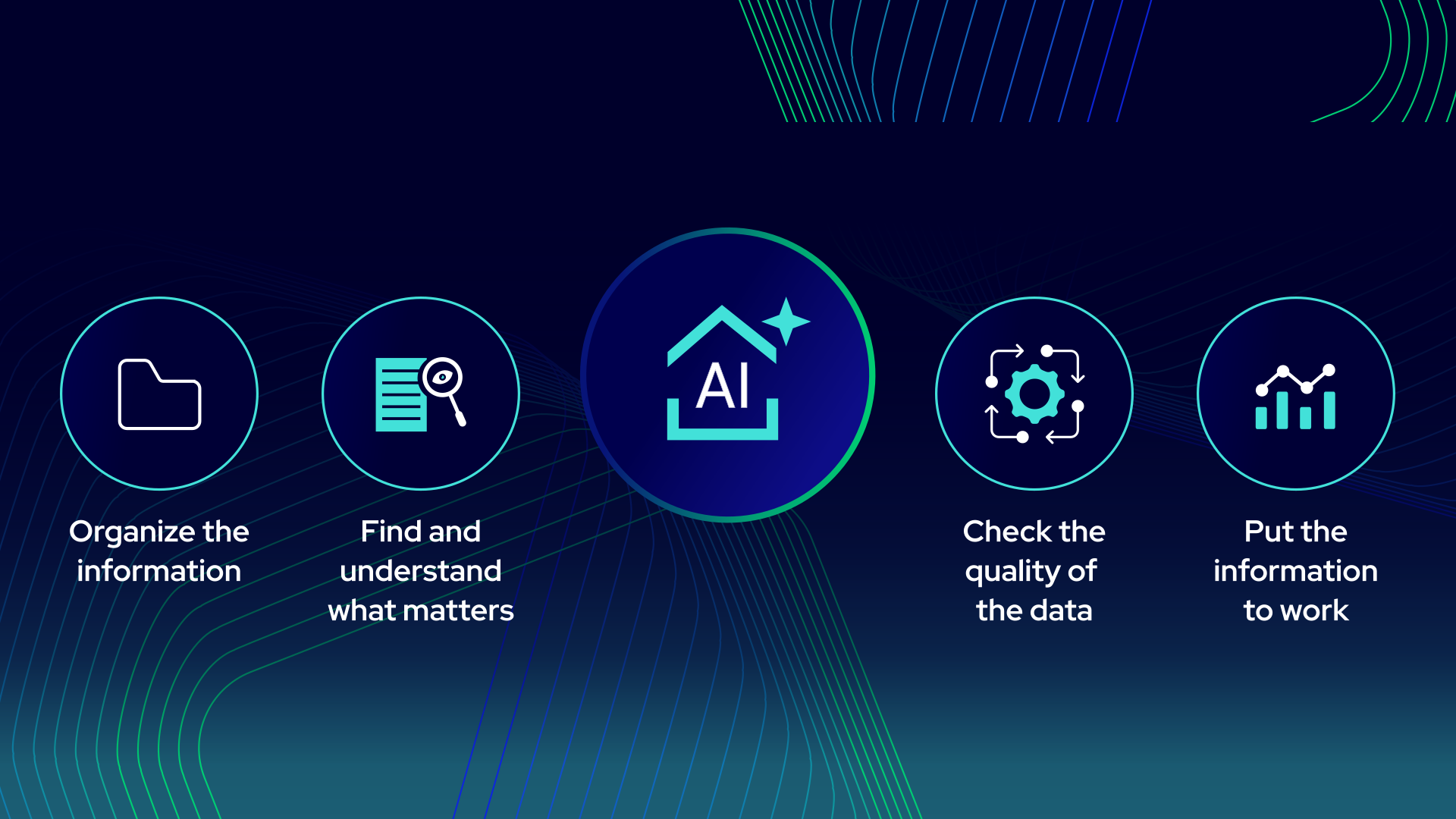
Here are four practical ways AI can support upstream document and data workflows today.
1. Organize the information
Many upstream records are difficult to use because they were never organized consistently in the first place. Files may be spread across shared drives, inboxes, legacy systems, archives, and acquisition packages. Names can be vague, large PDFs may contain dozens of separate documents, and records are not always connected to the assets they support.
The first step in oil and gas document automation is creating a clear, consistent structure for those records. AI can help by:
- Classifying documents: Identify whether a file is a mineral lease, surface agreement, drilling report, completion report, amendment, or another document type.
- Titling and splitting files: Apply consistent names and separate large scanned packages into individual documents.
- Extracting metadata: Pull dates, parties, agreement numbers, well identifiers, legal descriptions, and other searchable details.
- Connecting records to assets: Associate documents with the correct wells, leases, facilities, pipelines, tracts, or agreements.
This structure makes the information easier to find, review, and use in later workflows. A drilling report connected to the correct well is far more valuable than a PDF buried in a folder called “miscellaneous.”
2. Find and understand what matters
Once records are organized, AI can help you get the information you need without opening every file one by one.
Search in plain language
You may know the question without knowing the filename or folder. AI-powered search can help you find the answers to:
- Which agreements contain road-use conditions?
- What shut-in periods apply to these leases?
- Which completion reports mention lost time, and why?
- What drilling muds were used for wells in a specific formation?
The system can narrow the search to relevant assets and document types, then point back to the source records.
Extract key terms and values
AI can also pull information from many records into a structured table. Depending on the workflow, that could include:
- Clauses and obligations
- Rates, dates, depths, or distances
- Original parties and agreement numbers
- Reporting conditions or development requirements
- Technical values from drilling, completion, or geological reports
Instead of copying fields from hundreds of files, you can start with a structured dataset and review the results that need attention.
Summarize and compare related records
A base agreement may have several amendments, assignments, schedules, or exhibits. AI can bring related records together and compare terms across them. Your team still reviews the relevant language and interprets it.
3. Check the quality of the data
Finding information only helps if you can trust the records behind it. Oil and gas document automation using AI can surface problems that are hard to spot when documents and system data are reviewed separately.
Common quality checks include:
- Flagging missing records: Compare a file against expected document requirements and identify gaps.
- Finding mismatches: Surface inconsistent dates, parties, well identifiers, legal descriptions, or other values.
- Detecting duplicate or competing versions: Identify repeated files, historical versions, and documents that may no longer govern.
- Validating against trusted data: Cross-check extracted details against land systems, well data, production systems, or regulator records.
These checks do not decide which record is correct. They show where information does not line up, so your team can follow up and investigate.
4. Put the information to work
The biggest value comes when organized documents and extracted data support a real workflow — not just a cleaner archive.
Prepare records for A&D
AI can collect documents for an asset package, connect them to the correct wells and agreements, flag gaps, and organize the results for diligence or transfer.
Surface obligations and risks
Extraction and search can surface expiry conditions, consent requirements, shut-in terms, reporting commitments, or development obligations, with the source available for verification.
Review an entire portfolio
Document information can become a dataset you can sort, filter, compare, or map across a group of leases, wells, agreements, or reports.
Preserve institutional knowledge
Historical decisions often sit in old documents, correspondence, and folder structures understood by only a few employees. Searchable, asset-linked records help newer team members find that context.
These use cases are part of a broader shift toward oil and gas workflow automation, where documents, system data, and operational processes work together instead of living in separate places.
How to prepare upstream records for AI
AI works better when records have structure and context. Here are a few steps you can take to improve the results.
- Consolidate the records. Bring together relevant files from shared drives, inboxes, legacy systems, archives, and acquisition packages.
- Add structure and context. Use consistent document types, naming conventions, metadata, and asset links.
- Start with one focused use case. Choose a repeatable question, such as finding missing completion reports or extracting terms from road-use agreements.
- Use AI for the right part of the problem. Some questions are best answered using structured data from a land system, well master, production database, or public source. AI is most useful when the answer is buried in unstructured documents or written in language that needs to be extracted, summarized, or compared.
- Keep the source visible. Make sure extracted answers and summaries link back to the original document and page.
- Define human review. Decide which outputs can support routine work and which require specialist verification.
Starting small helps you test accuracy, build trust, and prove value before expanding.
AI supports the work. Your team still makes the call.
AI can retrieve, classify, extract, compare, and flag information at scale. But it does not understand every commercial, legal, regulatory, or operational implication. Professional judgment remains essential.
The most useful oil and gas document automation gives your team a cleaner starting point, clearer source material, and more time to apply its experience. See how StackDX uses AI to organize, connect, and put upstream documents to work.