
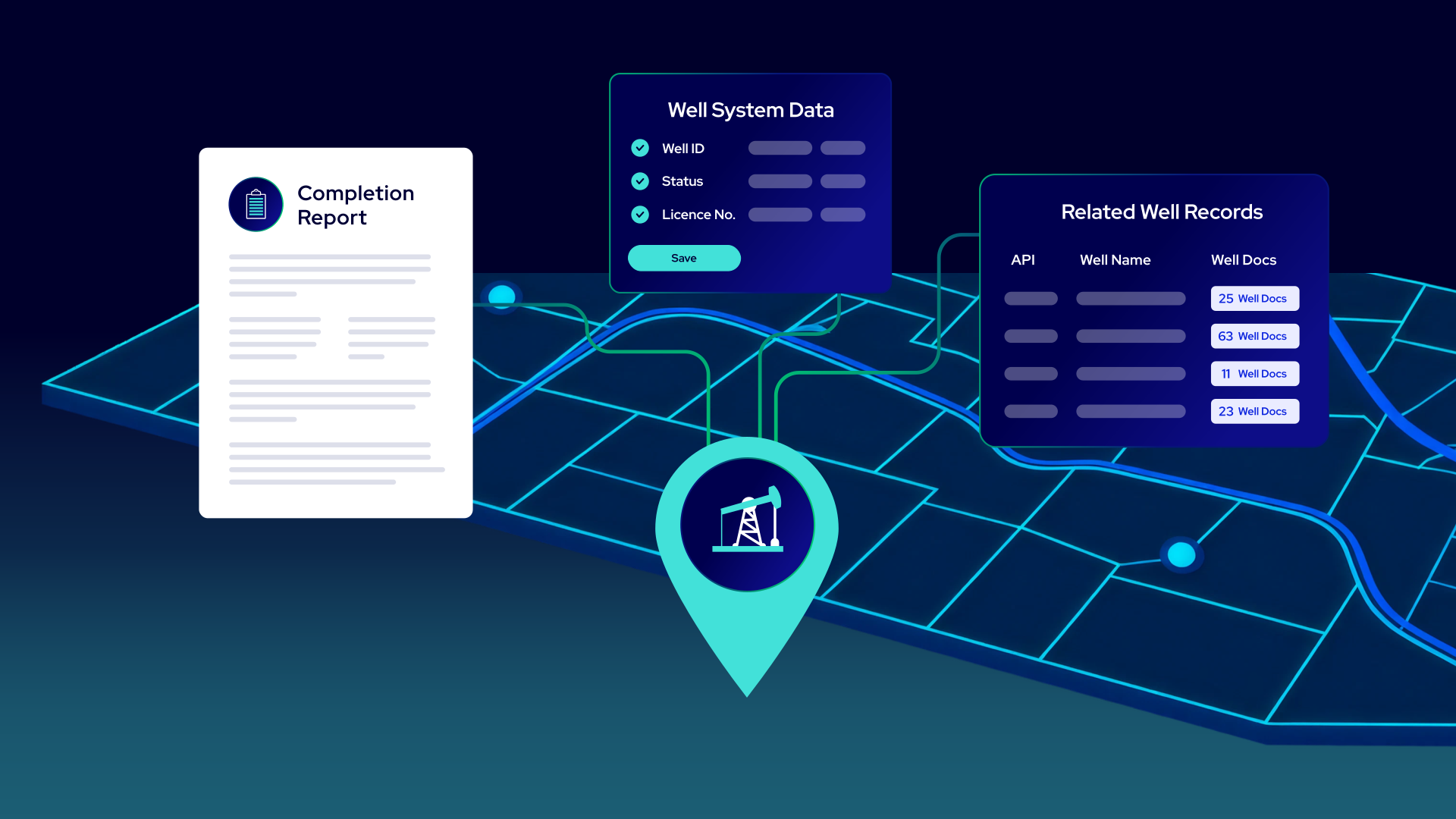
High-level well information can be accurate, but it may still leave you with questions. You may need the supporting completion report, the land agreement tied to the asset, the source of the status change, or a map showing how the well relates to nearby facilities or even other wells..
That’s a common data problem in upstream oil and gas. Your company may already have the answers somewhere, but the context is split between systems and records.
Oil and gas data management is the work of organizing and connecting those sources around the assets and business processes they support. Done well, it helps you find information faster and understand where it came from, so you spend less time piecing the record back together.
What is oil and gas data management?
Oil and gas data management is the process of organizing, connecting, and maintaining the information your teams use to manage wells, land, facilities, and other assets.
That information can live in places like:
- a well master
- land system
- documents
- public records
- maps
Some of it may be current data your team uses every day, while other details are buried in legacy files or come from outside sources.
The goal is to connect that information around the asset it belongs to. If you’re looking at a well, for example, you should be able to see the related system data, documents, land records, and other information that helps explain what’s happening with that well.
Good data management makes it easier to bring the right information together, understand where it came from, and use it with more confidence.
How oil and gas data management is different from document management
Document management focuses on storing, organizing, and finding files such as leases, drilling reports, and historical well records.
Oil and gas data management goes further by connecting those documents to the wells, land, facilities, and other information they relate to.
For example, a drilling report can be filed correctly but still cause problems if it’s linked to the wrong well. Good data management helps you connect the right records, spot differences between sources, and understand which information you can rely on.
Document management therefore plays an important role in upstream data management, especially when older records need to be digitized. The bigger job is connecting those files to the right assets and the information in your other systems.
The main types of oil and gas data to connect
Upstream information usually lives in several places. The goal is to connect those sources around the same well, lease, facility, or agreement.
Well and land system data
Your well master holds key information about each well, while your land system holds details about agreements, ownership, dates, and related records.
These systems often provide the core information your teams use every day. They also help connect documents and other records to the right asset.
Documents and source records
Documents often contain the detail behind what you see in your land or well system. A system might show an expiry date, for example, while the original agreement and later amendments explain where that date came from.
The same applies to well data. Drilling reports, completion reports, assignments, and other source files can help you verify what’s in the system and understand what changed. They can also provide context the system doesn’t capture.
This is where data quality matters. A wrong well number, missing amendment, or duplicate record can make otherwise accurate information harder to trust or use.
Public and regulatory data
Public data gives you another source to compare against your internal records.
In Alberta, for example, the Alberta Energy Regulator publishes well information that can be searched by licence number or well identifier. Comparing that data with your own records can help flag differences that need a closer look.
That can be useful during audits, asset reviews, acquisitions, or routine data checks.
Spatial data
Maps add location to the picture. They can show how wells relate to facilities, land, roads, nearby activity, and other assets.
When you connect map data with your internal records and documents, it becomes easier to understand an asset in context and find the information tied to it.
How do you connect different types of oil and gas data?
There are a few ways to connect information across your land, well, and document systems. The right approach depends on how much data you manage and how often it changes.
- Connect it manually: Teams can export data into spreadsheets and match it against documents or other records by hand. This can work for smaller projects, but it gets harder to maintain as your asset base grows.
- Use system integrations: Integrations can move data between applications automatically and keep related records in sync. Documents may still need extra work to connect them to the right well, lease, or asset.
- Use general document management software: These platforms can centralize files and make them easier to search. They may require more setup to connect documents with oil and gas-specific data.
- Use oil and gas-specific data management software: Purpose-built platforms can connect documents with land and well systems, public data, and maps around the assets they relate to.
Many operators use a mix of these approaches. The goal is to make the connections reliable without creating more manual work for your team.
Do operators need to replace their existing land and well systems?
Usually, no. It depends on how you choose to connect your data, but many approaches are built to work with the systems you already use.
Your well master can still hold well data, and your land system can still manage agreements and ownership. The goal is to connect the related documents, public data, and other records around those existing systems.
That way, you can make the information easier to find and use without replacing tools that already do their job well.
What connected oil and gas data can help you accomplish
Connected data helps your team answer practical questions without piecing information together from several places.
- Understand an asset: What do we know about this well, lease, or facility, and which records support it?
- Spot data issues: Where does internal information differ from public data or other records?
- Check record completeness: Do we have the documents and data needed for an audit, asset review, or transaction?
- Use AI more effectively: Can system data narrow what AI searches and help check the answers it pulls from your documents?
The business impact is less time spent searching, checking, and reconciling information by hand. It can also make AI more useful because it has better context to work from, helping your team get to reliable answers faster and move work forward with less manual effort.
Put your data to work with StackDX
StackDX connects your land and well documents with the systems and public data your teams already use.
You can keep working in your existing land, well, accounting, and production systems while StackDX helps connect the related records around each asset. It can also digitize and organize documents, then link them back to the right wells, leases, or facilities.
That gives your team a clearer way to find information, check where it came from, and work across your data without jumping between disconnected systems.