
In oil and gas acquisitions and divestitures (A&D), document issues can slow your deal down, create concerns during due diligence, and leave you with cleanup work after close.
If records are missing, scattered, or hard to verify, it becomes harder to answer questions with confidence and understand the true value of the asset. As a seller, you may be struggling to assemble a data room. As a buyer, you are trying to review what was shared or sort out what you actually received after close. In each case, you tend to face the same problems: missing files, disconnected records, and too much time spent chasing information.
According to McKinsey & Co., global oil and gas M&A reached $240 billion across 162 deals in 2025, which means record quality and due diligence still matter across a large volume of transactions.
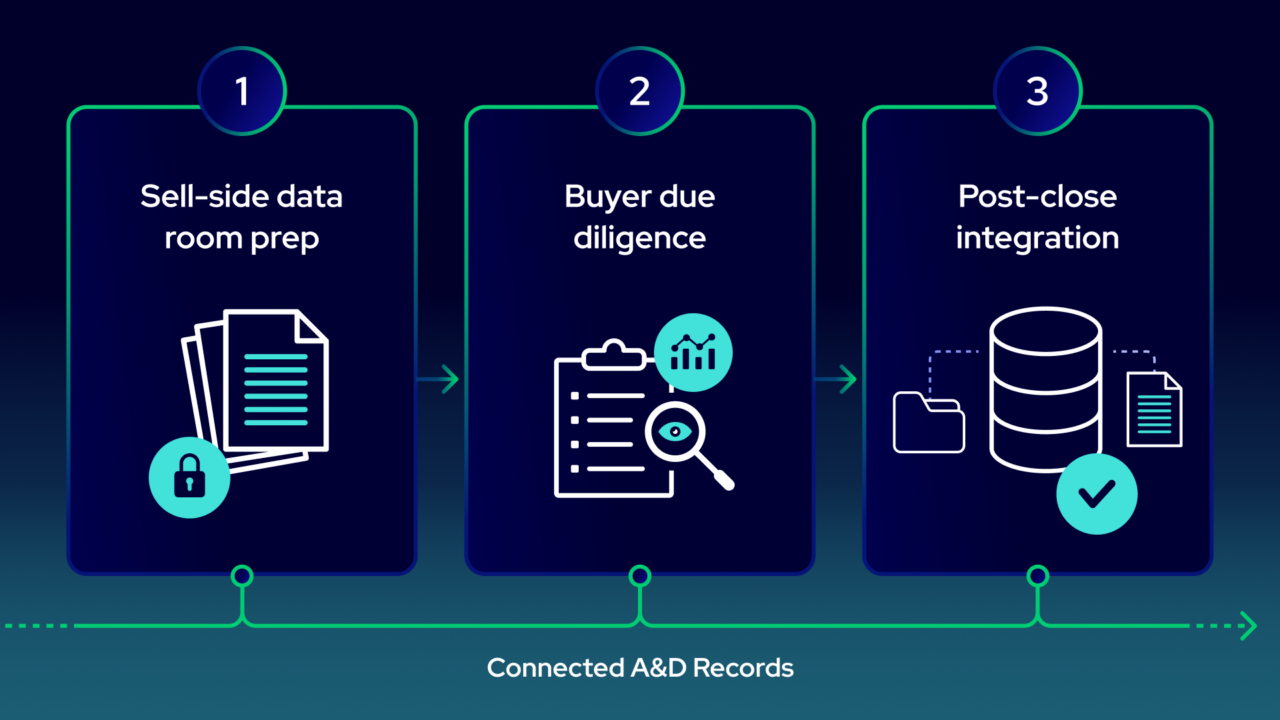
This post looks at three stages where those record issues create the most friction:
- Sell-side data room prep
- Buyer due diligence
- Post-close integration
Across all three stages, the challenge in oil and gas acquisitions and divestitures is the same: getting complete, reliable records and data into the right hands at the right time.
How to prepare a sell-side data room: start with the asset list
Preparing a sell-side data room for oil and gas acquisitions and divestitures starts with the asset list. A strong oil & gas virtual data room is built based on the assets to be sold with records organized in a way that supports due diligence.
The seller’s workflow for building a data room
In practice, sell-side data room prep usually looks something like this:
- Define the asset package
- Identify which records belong to those assets
- Pull documents from multiple systems and file locations
- Check whether anything is missing, duplicated, or misfiled
- Organize the records by asset so a buyer can review them efficiently
- Control access and track what was shared
What makes this workflow difficult is that the records are often spread across different systems and not clearly connected to the assets in the deal. Some files are hard to find, some are misfiled, some are named in ways that are not useful, and some are missing.
Why accuracy and completeness affect deal value
While getting the data room prepared quickly is important, speed is not the only goal. If key documents are missing, the wrong files are included, or if buyers cannot tell what belongs to which asset, the VDR creates more work:
- Answering more diligence questions from buyers
- More follow-up requests from buyers
- More time spent by your internal teams locating information and pulling documents
- Buyers have less confidence in the package
When buyers are missing records for assets included in the sale, or when they see documents that do not match the asset list, it becomes harder for them to review the package within the diligence period. That lowers confidence in the deal and in some cases, can affect how they assess risk and what they are willing to pay.
Audit trail is not optional
A sell-side data room also needs a clear audit trail. If a buyer later says a document was withheld, you need to be able to show exactly what happened. Was the file in the VDR? When was it added? Who had access to it? Was it viewed?
Without that record, you are left arguing from memory instead of evidence. That is why a data room needs to function as a controlled disclosure environment, with a traceable history of what was shared and when.
Buyer diligence: how to review an oil and gas data room
Once the data room is open, the buyer’s job in oil and gas acquisitions and divestitures is to confirm that the records in the VDR match the assets in the deal, identify what is missing, and flag issues that could affect value, timing, or risk.
That gets challenging when the VDR contains a lot of files, but not the right structure or context.
What buyer-side diligence usually looks like
Buyer due diligence in the data room usually follows this process:
- Review the asset list and deal scope
- Check that the VDR includes records for the assets actually being acquired
- Validate that key documents are complete, readable, and tied to the right wells, lands, contracts, or facilities
- Note missing items, inconsistencies, or gaps
- Send follow-up questions and document requests
- Re-review the new material and assess whether the issue is resolved
That process is a challenge when records are hard to trace back to the asset list, when documents are missing context, or when follow-up requests keep uncovering more gaps.
What you should be checking for in the data room
As a buyer, your goal is to confirm that the package is complete, accurate, and usable for review. A practical oil & gas due diligence checklist helps your team quickly spot the document issues that can slow deals down or create unnecessary risk.
That usually means checking for things like:
- Do the documents in the VDR actually match the wells, lands, agreements, and facilities in the deal?
- Are key files missing for assets that are included in the package?
- Are there amendments, exhibits, or referenced attachments missing from the file set?
- Are documents clearly named and organized enough to review efficiently?
- Are records linked to the right asset, or are there documents for the wrong properties mixed in?
- Are there obvious inconsistencies between the VDR, the asset schedule, and the seller’s system data?
These are basic checks, but they matter because they tell you whether you are looking at a usable diligence package or an incomplete one.
Post-close integration: organizing and validating acquired records
Once the transaction closes, the focus for the buyer shifts to what you actually received, what is missing, and how to make those records usable in your own environment.
After close, the work shifts from disclosure to data health
Post-close integration involves cleaning up and connecting the records that came with it. That usually means you need to:
- Merge acquired files into your existing systems
- Connect documents to the right wells, lands, contracts, and facilities
- Identify records that are missing, duplicated, or stranded
- Confirm what is actually usable for ongoing operations and compliance
In oil and gas acquisitions and divestitures, this post-close work is where many acquisitions start to create operational drag. The records may have changed hands, but that does not mean they are organized, linked, or trusted enough to support the teams now responsible for them.
That is the difference between receiving files and receiving records you can actually use.
Why post-close cleanup needs to happen quickly
Post-close cleanup work is also time-sensitive. Sellers do not keep copies forever. If you, as a buyer, wait too long to identify a missing record or a misfiled package, the source for that information may already be gone. The longer post-close cleanup is delayed, the harder and more expensive it becomes.
Regulatory deadlines and contractual obligations do not pause when a transaction happens. That means accurate and timely data integration is crucial to maintain continuous operations and avoid government-imposed penalties and potential legal disputes.
An example of quickly ingesting and integrating large volumes of documents comes from Tourmaline’s acquisition of Bonavista. After the close of the $1.5 billion deal, StackDX loaded 500,000 well documents over a single weekend and had them ready to review by Monday. That allowed Tourmaline to quickly identify gaps, stranded data, and disorganization that would normally take months to sort through.
A better way to manage oil and gas A&D
A better A&D process connects the full record workflow. You define the asset scope, gather the supporting records, control what is shared during diligence, transfer the files at close, and then validate what was received. The goal is not just to move documents from one side to the other, but to keep records organized, traceable, and usable from start to finish.
That is where StackDX fits. StackDX is not just a virtual data room, and it is not just an AI tool for documents. It connects unstructured documents with system and public data so your team can find, validate, and act on records across the full deal lifecycle. And because well and land files are already organized in StackDX, creating a VDR can take minutes instead of weeks of manual gathering and setup.